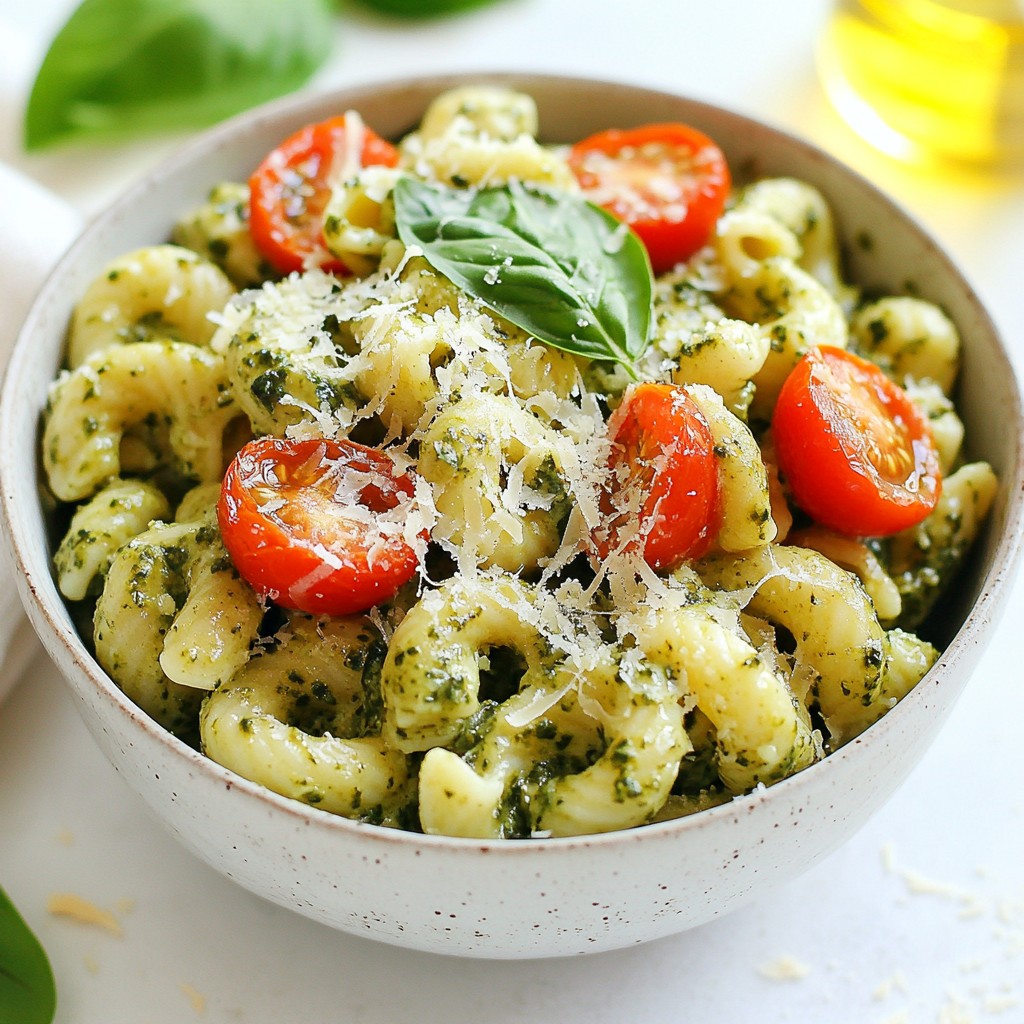
Are you ready for a quick, tasty dish? This One-Pot Creamy Pesto Pasta is easy to make, and it packs a punch of flavor. With just a few ingredients, you can whip up a satisfying meal in no time. Plus, you’ll learn some simple tips to avoid common mistakes. Let’s dive into the world of creamy, herby goodness and transform your kitchen into a flavor haven!
Why I Love This Recipe
- Quick and Easy: This recipe comes together in just 25 minutes, making it perfect for busy weeknights or quick lunches.
- Rich Flavor: The combination of heavy cream and basil pesto creates a luxurious sauce that's packed with flavor.
- Customizable: You can easily swap the pasta shape, add protein, or mix in your favorite vegetables for a unique twist.
- Comfort Food: This creamy pasta dish is the definition of comfort food, perfect for bringing warmth and satisfaction to any meal.
Ingredients
List of Essential Ingredients
To make One-Pot Creamy Pesto Pasta, you need these key items:
- 12 oz. pasta of your choice (fusilli or penne are ideal)
- 2 cups vegetable or chicken broth
- 1 cup heavy cream
- 1 cup basil pesto (store-bought or homemade)
- 1 cup cherry tomatoes, halved
- 1 cup fresh spinach leaves
- 1 cup grated Parmesan cheese (with extra for serving)
- 2 tablespoons olive oil
- 2 cloves garlic, minced
- Salt and freshly cracked black pepper, to taste
These ingredients work together to create a rich and tasty meal. The pasta absorbs flavor from the broth and pesto, while the cream adds a nice touch of richness.
Optional Ingredients for Extra Flavor
You can also add some optional ingredients to boost the taste:
- Crushed red pepper flakes for heat
- Pine nuts for crunch
- Fresh basil leaves for more aroma
- Lemon zest for a bright finish
These extras can make your dish even more unique. Feel free to mix and match based on what you like!
Suggested Pasta Variations
While I recommend fusilli or penne, you can use other pasta shapes too:
- Farfalle for a fun look
- Spaghetti for a classic approach
- Gluten-free pasta if needed
Choose your favorite pasta shape to customize your dish. Each shape will bring its own texture, making every bite special!
Step-by-Step Instructions
Preparation of Ingredients
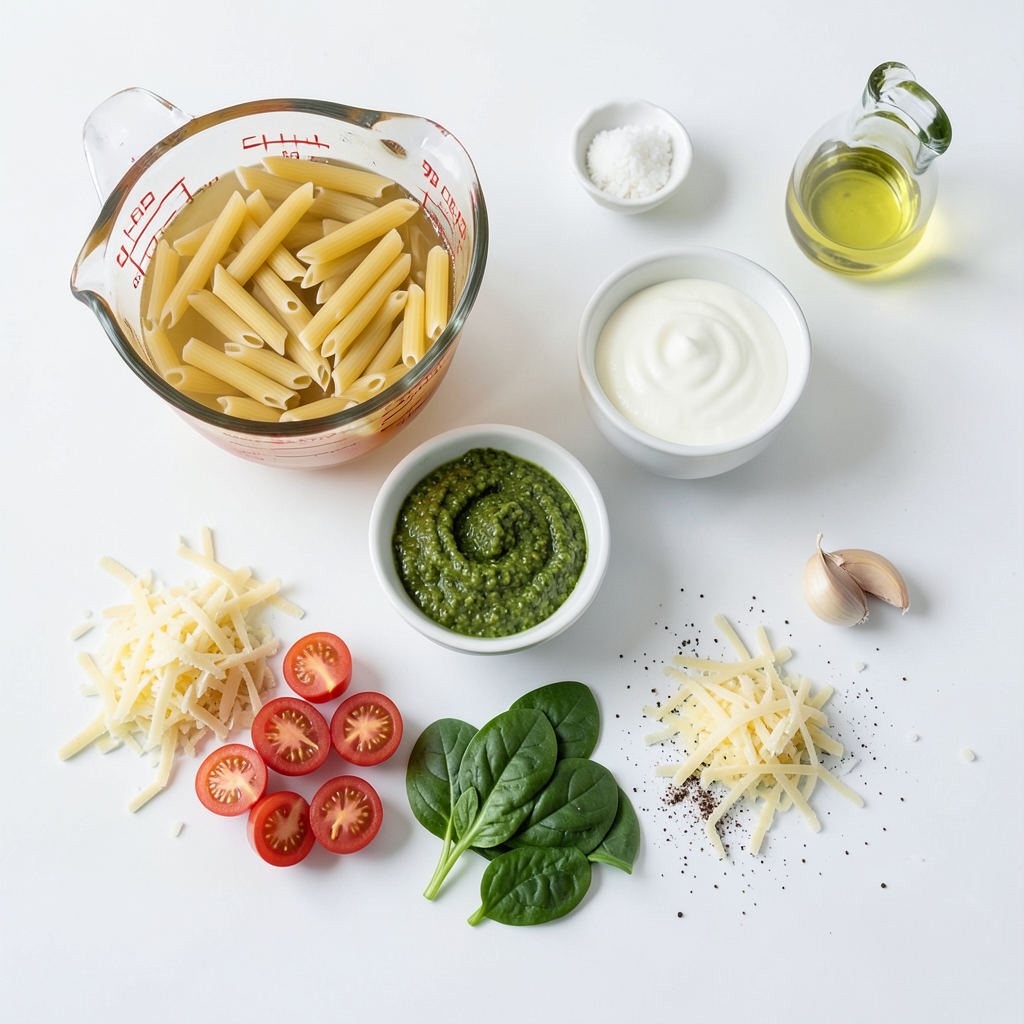
Start by gathering your ingredients. You will need:
- 12 oz. pasta of your choice (fusilli or penne are ideal)
- 2 cups vegetable or chicken broth
- 1 cup heavy cream
- 1 cup basil pesto (store-bought or homemade)
- 1 cup cherry tomatoes, halved
- 1 cup fresh spinach leaves
- 1 cup grated Parmesan cheese (with additional for serving)
- 2 tablespoons olive oil
- 2 cloves garlic, minced
- Salt and freshly cracked black pepper, to taste
Wash the spinach and cherry tomatoes. Halve the cherry tomatoes for easy mixing. Mince the garlic to release its flavor.
Cooking Process Overview
In a large pot, warm the olive oil over medium heat. Add the minced garlic and sauté for 1-2 minutes. Stir often to avoid burning the garlic.
Next, add the dry pasta. Mix well so each piece is coated in garlic oil. Pour in the broth and raise the heat to high. Once boiling, reduce to a simmer. Cover the pot and cook for about 10 minutes. Stir occasionally to keep the pasta from sticking.
When the pasta is al dente, pour in the heavy cream and basil pesto. Stir until smooth. Gently fold in the halved cherry tomatoes and spinach. Cook just until the spinach wilts.
Remove the pot from heat. Stir in the grated Parmesan cheese until melted. Season with salt and black pepper to taste. Allow the pasta to rest for a few minutes.
Tips for Achieving Perfect Pasta Texture
For perfect pasta, watch the cooking time closely. Stir often while it simmers. Al dente pasta should be firm but not hard.
If the pasta seems dry, add more broth or cream. For creamier pasta, use more heavy cream.
Resting the pasta after cooking helps it thicken. This allows the flavors to blend well. Serve it warm for the best taste. Enjoy!
Tips & Tricks
Common Mistakes to Avoid
One big mistake is burning the garlic. Keep an eye on it while it cooks. If it turns dark, it can taste bitter. Another mistake is not stirring the pasta enough. Stirring helps keep it from sticking together. Lastly, don’t skip the salt. It adds flavor to the pasta as it cooks.
How to Enhance Flavor Profiles
You can boost the taste by adding fresh herbs. Chopped basil or parsley brightens up the dish. A squeeze of lemon juice also adds zest. For a richer flavor, try using homemade pesto. It can make a big difference in taste. You might also consider adding sun-dried tomatoes for a tangy twist.
Adjusting Spiciness and Creaminess
If you like it spicy, add red pepper flakes while cooking. Start with a small amount and taste as you go. For more creaminess, use extra heavy cream or a splash of cream cheese. This will make the sauce even richer. Adjust the cream to your taste, but remember, balance is key!
Pro Tips
- Choose the Right Pasta: Opt for pasta shapes like fusilli or penne, as they hold the creamy pesto sauce beautifully.
- Homemade Pesto Advantage: If time allows, making your own basil pesto can elevate the flavor profile of this dish significantly.
- Vegetable Variations: Feel free to add or substitute vegetables such as zucchini or bell peppers for added nutrition and color.
- Serve Immediately: For the best texture and flavor, serve the pasta right after it’s made, as it thickens upon sitting.
Variations
Vegetarian and Gluten-Free Options
For a vegetarian take, use vegetable broth and skip any meat. You can also swap heavy cream for a plant-based option like coconut cream or cashew cream. For gluten-free pasta, choose a blend made from rice, quinoa, or chickpeas. This keeps the dish creamy and tasty without gluten.
Add-ins for Protein (Chicken, Shrimp, etc.)
If you want to add protein, chicken or shrimp works great. Cook bite-sized chicken pieces in the pot before adding garlic. For shrimp, toss them in when you add cream and pesto. Both options add flavor and make the dish more filling. Don't forget to adjust cooking times for different proteins.
Seasonal Variations (Adding Vegetables)
Seasonal veggies can change this dish every time you make it. In spring, add asparagus or peas. In summer, toss in zucchini or bell peppers. Fall favors mushrooms or butternut squash. In winter, kale or broccoli adds color and nutrients. Just add them when you mix in the tomatoes and spinach.
Storage Info
Best Practices for Leftovers
To keep your creamy pesto pasta fresh, store it in an airtight container. Let the pasta cool before sealing it. This helps prevent moisture buildup. Use it within three days for the best taste. If you want to keep leftovers longer, freezing is a great option.
Reheating Instructions
To reheat, place the pasta in a pot over low heat. Add a splash of broth or cream to keep it moist. Stir often until it’s warm. You can also use a microwave. Just cover it with a lid and heat in short bursts. Stir in between to avoid hot spots.
Freezing Tips and Guidelines
Freezing is easy! Divide the pasta into meal-sized portions. Store each portion in freezer-safe bags or containers. Remove as much air as possible before sealing. It should last up to three months in the freezer. When ready to eat, thaw it overnight in the fridge. Then, reheat as mentioned above.
FAQs
Can I use different types of pasta?
Yes, you can use any pasta you like. Fusilli and penne work great. You can also try spaghetti or farfalle. Each type will change the look and feel of the dish. Just make sure to adjust cooking time as needed.
How can I make this dish lighter?
To lighten this dish, you can use whole wheat pasta. You could also swap heavy cream for a light cream or milk. Adding more veggies like zucchini or bell peppers can also help. This keeps the dish tasty while cutting down on calories.
What can I substitute for pesto?
If you don’t have pesto, you can use a green sauce like chimichurri. A mix of fresh herbs, garlic, and olive oil works well too. You can even try a store-bought Alfredo sauce for a creamy twist.
How long does it take to cook the pasta?
Cooking the pasta takes about 10 minutes. This time will give you that perfect al dente bite. Just keep an eye on it and stir often to avoid sticking. Don’t forget, the pasta will keep cooking after you take it off the heat.
This blog outlined the key ingredients and steps for perfect pasta. We explored essential and optional ingredients for various flavors. The cooking process and texture tips will help you achieve the best results. We discussed common mistakes and ways to enhance your dish. Plus, we shared variations for different diets and seasonal ingredients. Finally, we covered storage and reheating tips to enjoy leftovers. With these insights, you can create delicious pasta meals with ease and confidence. Now, it’s time to cook and impress!