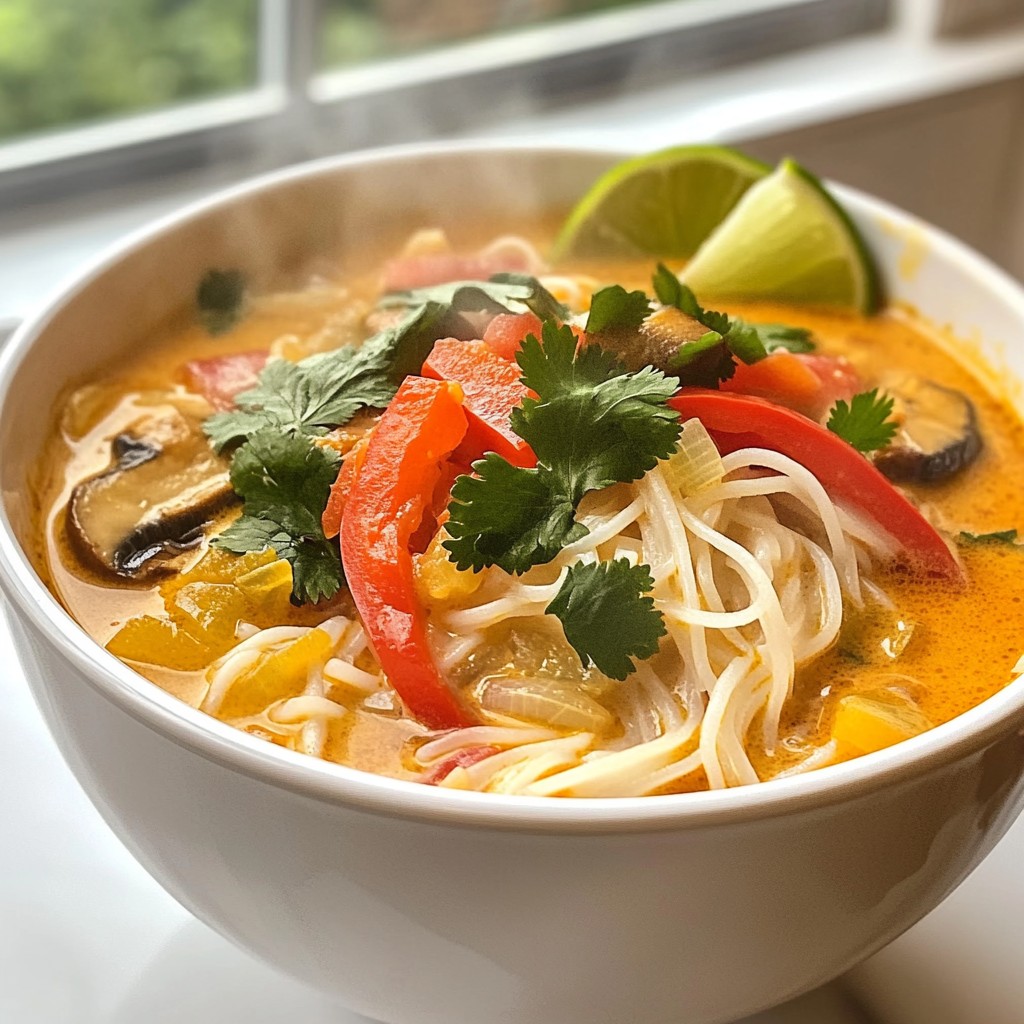
Are you ready to dive into a bowl of delicious Thai Red Curry Noodle Soup? This rich and flavorful recipe packs a punch with fresh ingredients and creamy coconut milk. Not only will you learn how to make this comforting dish step by step, but I’ll also share tips on variations and storage. Get your taste buds ready for a culinary adventure that’s easy to master! Let’s get cooking!
Why I Love This Recipe
- Bold Flavors: This soup is packed with vibrant flavors from the red curry paste and fresh ingredients, making each spoonful a delightful experience.
- Quick and Easy: With a prep time of just 15 minutes, this recipe is perfect for busy weeknights when you crave something comforting yet fast.
- Customizable: You can easily adapt this recipe to include your favorite vegetables or proteins, making it versatile for different dietary preferences.
- Healthy and Nourishing: With wholesome ingredients like spinach and bell peppers, this soup is not only delicious but also packed with nutrients.
Ingredients
Main Ingredients
- 200g rice noodles
- 1 tablespoon coconut oil
- 1 onion, thinly sliced
- 3 cloves garlic, minced
- 1 tablespoon fresh ginger, grated
- 2 tablespoons red curry paste
- 1 can (400ml) coconut milk
- 4 cups vegetable broth
- 1 tablespoon soy sauce
- 1 tablespoon fresh lime juice
- 1 cup bell peppers, sliced
- 1 cup mushrooms, sliced
- 1 cup baby spinach, packed
- Fresh cilantro leaves for garnish
- Lime wedges for serving
- Salt and freshly cracked black pepper to taste
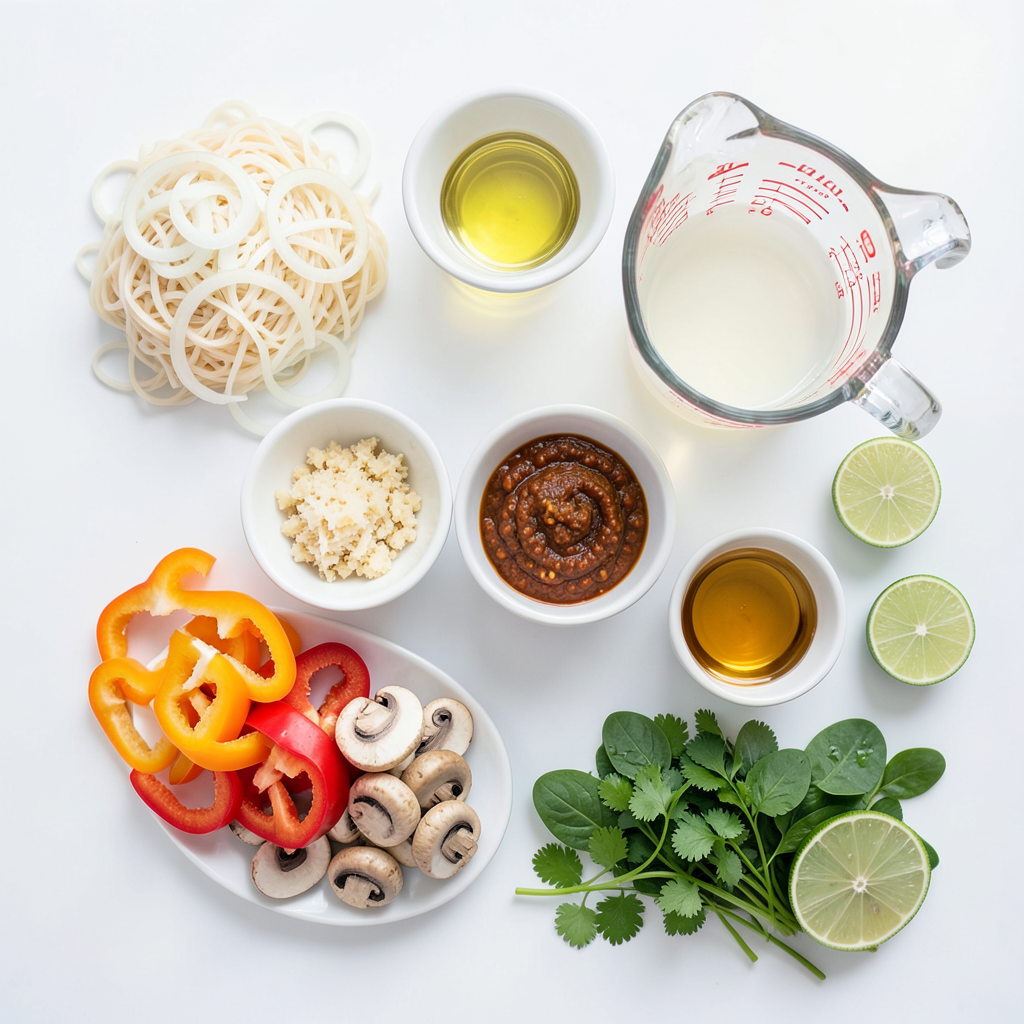
I love using fresh ingredients for this soup. The rice noodles give the dish a nice texture. Coconut oil adds a rich taste and makes the soup silky. Onions, garlic, and ginger create a solid flavor base. Red curry paste brings the heat and depth.
I always use a can of coconut milk for creaminess. The vegetable broth adds warmth and body to the soup. Soy sauce adds a nice salty touch. Fresh lime juice brightens the flavors and balances the heat.
For color and taste, I add bell peppers and mushrooms. Baby spinach gives the soup a fresh feel. The cilantro leaves are a perfect garnish, and lime wedges give an extra zing.
Using these simple yet vibrant ingredients, you can create a rich and flavorful Thai red curry noodle soup that delights the senses.
Step-by-Step Instructions
Preparation Steps
1. First, cook the rice noodles. Follow the package instructions. Once they are cooked, drain them well. Set them aside for later.
2. Next, grab a large pot and heat the coconut oil over medium heat. Add the sliced onion. Sauté for about 5 minutes until soft and translucent.
3. Then, add the minced garlic and grated ginger. Sauté for an extra minute. This will make your kitchen smell great!
4. Now, it’s time to add the red curry paste. Stir it well to mix with the onion, garlic, and ginger. Cook for one more minute to let those flavors come out.
Combine Soup Ingredients
1. Pour in the coconut milk and vegetable broth. Stir to mix everything together. Bring the soup to a gentle simmer.
2. Add the soy sauce and fresh lime juice. Mix it well. Let the soup simmer for about 5 minutes. This will deepen the flavors.
3. Toss in the sliced bell peppers and mushrooms. Let them cook for another 5 minutes. You want them to be tender but still colorful.
Final Touches
1. Stir in the baby spinach. Allow it to wilt for about 1 minute. This adds a nice fresh touch to your soup.
2. Season the soup with salt and freshly cracked black pepper. Taste and adjust the seasonings as you like.
3. To serve, place some cooked rice noodles in each bowl. Ladle the hot curry soup over the noodles. Garnish with fresh cilantro leaves and serve with lime wedges on the side. Enjoy your delicious creation!
Tips & Tricks
Cooking Tips
- To keep your noodles firm, do not overcook them. Follow package instructions closely. Drain the noodles and rinse them in cold water. This stops the cooking process and helps them stay al dente.
- For colorful and flavorful veggies, choose a mix of red, yellow, and green bell peppers. Their bright colors make the soup pop. Mushrooms add depth, while spinach gives a fresh taste.
Flavor Enhancements
- Adjust the spice level by adding more or less red curry paste. For a milder soup, start with one tablespoon and taste as you go. You can always add more if you like heat.
- If you want extra protein, try tofu or chicken. Cook them separately and add them to the soup right before serving. This keeps their textures nice and adds heartiness.
Presentation Tips
- Serve the soup in deep bowls for a cozy feel. The rich colors will shine through. Place a sprinkle of cilantro on top for a fresh touch.
- Lime wedges on the side not only look pretty but also add a zesty kick. This gives your guests the option to add more citrus to their bowls.
Pro Tips
- Use Fresh Ingredients: Opt for fresh vegetables and herbs to enhance the flavors and nutritional value of your soup.
- Adjust Spice Levels: Feel free to increase or decrease the amount of red curry paste based on your heat preference.
- Garnish Creatively: Besides cilantro, consider adding sliced red chili or toasted coconut flakes for added texture and flavor.
- Make It a Meal: For a heartier dish, add protein such as tofu, chicken, or shrimp to the soup during the cooking process.
Variations
Different Protein Options
You can use different proteins in your Thai Red Curry Noodle Soup. Shrimp adds a nice touch. Cook it in the soup until pink and tender. Chicken is another great choice. Just slice it thin and add it early in the cooking process. If you prefer a vegetarian meal, tofu works well too. Choose firm tofu and sauté it until golden before adding it to the soup.
Specialty Diet Modifications
For those who need gluten-free options, you can choose rice noodles made from rice flour. They are easy to find and work perfectly in this soup. If you want to make it vegan or dairy-free, skip the fish sauce and use soy sauce instead. The coconut milk keeps the soup creamy and rich without dairy.
Seasonal Ingredient Swaps
Using seasonal vegetables can make your soup even better. During spring, add fresh peas or asparagus for a crunchy bite. In the fall, consider using pumpkin or butternut squash to add sweetness. You can also play with herbs. Adding fresh basil or mint gives a new twist to the dish. They add a fresh and fragrant note that makes the soup even more exciting.
Storage Info
Storing Leftovers
To store your Thai Red Curry Noodle Soup, let it cool first. Use airtight containers for best results. Place the soup in the fridge. It stays fresh for about 3 to 4 days. Always label your containers with the date. This way, you know when to eat it.
Freezing Instructions
You can freeze this soup if you want to save it for later. Pour the cooled soup into freezer-safe containers. Leave some space at the top for expansion. It can last for up to 2 months in the freezer. When you’re ready to eat, thaw it overnight in the fridge.
To reheat, warm it on the stove over low heat. Stir often to keep it from sticking. Add a splash of vegetable broth if it seems thick. This helps bring back its creamy texture and fresh flavor.
FAQs
What can I substitute for rice noodles?
You can use wide egg noodles or whole grain pasta. Both are great options. I also like using zucchini noodles for a low-carb twist. They add a fresh taste and fun texture.
How spicy is Thai Red Curry Noodle Soup?
The soup has a mild to medium heat level. The red curry paste gives some spice, but you can adjust it. If you want more heat, add extra paste or fresh chili.
Can I make this soup ahead of time?
Yes, you can make this soup ahead of time. It tastes even better after the flavors blend. Just remember to cook the noodles fresh when you serve it.
How do I store the soup properly?
Store the soup in an airtight container. Keep it in the fridge for up to three days. If you want to freeze it, leave out the noodles. You can freeze the soup for up to a month. Reheat it on the stove for the best flavor.
This blog post guided you through making delicious Thai Red Curry Noodle Soup. We covered the main ingredients, step-by-step instructions, and helpful tips to perfect your dish. You learned how to customize flavors and choose proteins to suit your taste. Remember, presentation matters too!
Enjoy experimenting with seasonal vegetables and creating your version. Happy cooking!